GTL | GettingOut
- 3.3
- Rating
- 1.00M
- Installs
- Free
- Price

 Analysis by App-foxy
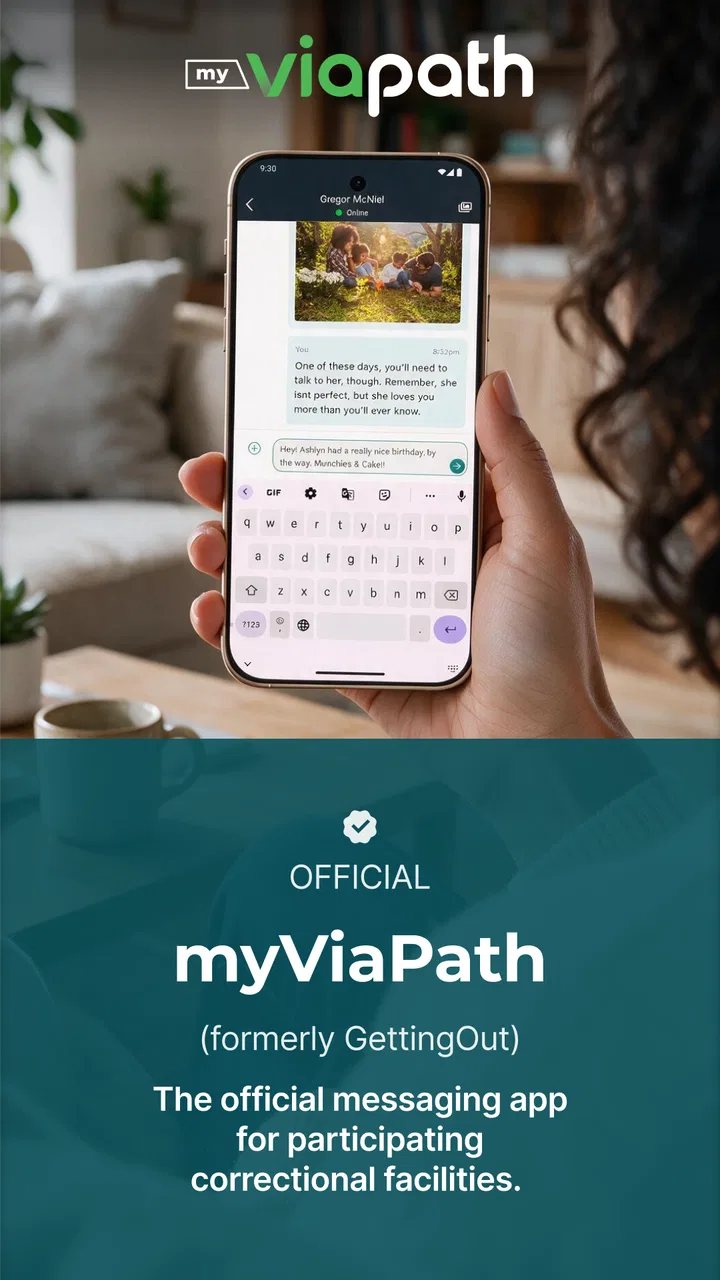
Keeping in touch with someone in custody is not a normal messaging task. The conversation may depend on approved channels, account setup, facility rules, and a family member who is already dealing with enough stress. That is where GTL | GettingOut aims to help: it is a free productivity app from Viapath built around communication between inmates, friends, and family.
I found its appeal easy to understand during the first few uses. Instead of treating this situation like ordinary texting, the app gives the communication process its own place. That separation matters when messages, contacts, and expectations need to stay organized. My overall impression is positive but practical: this is useful when your contact already relies on the GTL communication system, while it is a poor fit if you simply want a general-purpose messenger for everyday conversations.
What the first week feels like
The first-week experience is mostly about learning the app’s rhythm rather than discovering a large collection of extras. Its purpose is narrow, and that is a strength. I do not open it expecting social feeds, entertainment, or a crowded productivity dashboard. I open it with one question: can I manage communication with the person I need to reach without turning the process into a confusing search through unrelated apps?
You May Also Like

 Blood Strike: 2.5 Anniversary
Blood Strike’s Loadouts Turn Every Drop Into a Tactical Gamble
A close look at Blood Strike’s custom loadouts: how fast access to signature weapons reshapes its battle royale rhythm, rewards preparation, and narrows the gap between fights.

 Pandora - Music & Podcasts
Pandora’s Music Is Easy to Start, but Harder to Recover
Pandora’s strength is its low-effort path from a seed to a station. Its weak spot is how much confidence it asks you to place in connection, setup, and quiet recovery.

 8 Ball Pool
 Is Built on Rivalries, Rematches, and Routine
A close look at the rivalries, rematches, shared routines, and unanswered safety questions that turn a quick pool match into a persistent mobile community.

 Samsung Music
’s Quiet Strength Is Playing What You Already Own
Its reach comes less from spectacle than from dependable access to a personal library. That simplicity is both the app’s strongest retention engine and its ceiling.

 AccuWeather: Weather Radar
AccuWeather Review: A Quick, Clear Forecast for Everyday Decisions
For everyday plans, the best forecast is the one you can understand quickly. AccuWeather makes rain timing, radar, and local conditions easy to act on, with a few trade-offs.

 Hill Climb Racing
Why Hill Climb Racing Still Turns Crashes Into One More Run
A tiny car, a bumpy hill and one more upgrade: Hill Climb Racing keeps resurfacing because its simple chaos makes every near-miss feel personal.
More From Our News Desk



That focused design makes sense for families and friends who may not be comfortable with complicated technology. The age rating is Everyone, and the basic idea is straightforward enough for a wide range of users. The important distinction is that “simple” does not necessarily mean instant. The communication process is still shaped by the correctional setting, so a clean app cannot remove every delay or restriction connected with that environment.
A realistic everyday scenario is a relative checking the app after work, reviewing the available conversation options, and sending a short update about home. The value is not in making that message exciting; it is in creating a repeatable place for the exchange. I would recommend starting with short, clearly written messages and taking time to understand how the intended contact is represented in the app before relying on it for something urgent.
One useful habit is to treat the first week as an orientation period. Rather than assuming that the app behaves like standard SMS, I would check each screen carefully, confirm that the right contact is selected, and keep expectations realistic about response timing. This reduces a common source of frustration: blaming the app for a delay that may come from the wider communication process.
The current version is 3.4.1, and the app runs on Android devices using version 7.0 or later. That makes it accessible on many older phones, which is relevant for households where not everyone upgrades devices regularly. Still, compatibility is only the first question. A phone can run the application and the experience can still depend on whether the person you want to contact is supported through the relevant GTL arrangement.
The right audience is narrower than the category suggests
Although it sits in the productivity section, I would not compare it with a notes app, calendar, or team workspace. Its productivity value is personal and situational: it helps people maintain an important line of communication. That makes it especially suitable for relatives, close friends, and support networks who need a dedicated way to stay connected with an incarcerated person.
I would skip it if I were looking for an ordinary private chat app for two people who are both freely using smartphones. A mainstream messenger will usually be more natural for that purpose. GettingOut earns its place when the correctional communication context is the reason you need the app in the first place.
The app has also attracted a substantial audience, with more than a million installs, but popularity should not be mistaken for universal suitability. The average rating is 3.3, based on around 21 thousand ratings, which suggests a mixed experience rather than a product everyone finds effortless. I read that as a reason to approach it with patience, not as an automatic rejection. In this category, some dissatisfaction can come from the broader rules and limitations surrounding communication, but the app still needs to make those moments understandable.
Where the early usefulness comes from
The strongest early benefit is concentration. When communication is emotionally important, having a dedicated destination is better than scattering reminders, contact details, and conversations across a phone. I also like the psychological clarity: opening the app signals that I am checking a specific relationship and its communication channel, not casually browsing a general inbox.
Another practical advantage is routine. A family member can choose a regular time to check for updates instead of repeatedly refreshing throughout the day. That small change can protect attention and reduce anxiety. I would go further and keep a simple personal note about when I last checked and what I wanted to say next, especially if conversations are intermittent. The app handles the communication space; the user still benefits from managing the surrounding habit.
There is a trade-off here. A focused app can feel reassuring when everything is working, but it can feel limited when you want the flexibility of a normal messenger. You should not install it expecting it to replace every other way of communicating. Its first-week appeal comes from being purpose-built, not from offering a broad toolbox.
Does it still earn attention after the novelty?
I judge its staying power less by novelty than by whether it fits a steady, realistic contact routine. For someone who relies on this channel, a predictable check-in can be more useful than a stream of features; for occasional users, the narrow purpose may not justify keeping another app installed. The next section looks at how its current version shapes that day-to-day choice.
Month-to-month value depends on the relationship
After the initial setup period, the question changes from “Can I use this?” to “Does this deserve a permanent place on my phone?” For me, the answer depends almost entirely on whether I have an ongoing need to communicate through the GTL system. If the relationship is active, the app can become a dependable part of a weekly routine. If contact is rare or temporary, it may feel like a single-purpose installation that sits untouched.
This is not an app that creates value by itself. It does not turn an inactive conversation into an active one, and it cannot make difficult circumstances simple. Its recurring value comes from reducing the friction around a communication habit that already matters. That is an important distinction for anyone deciding whether to keep it installed.
I would use it alongside a broader personal routine: set a realistic check-in schedule, write down questions before opening the app, and keep messages focused enough that the recipient can follow them easily. This is one of the less obvious strengths of a dedicated communication tool. It encourages intentional contact rather than the rapid, fragmented exchanges common in ordinary chat apps.
For families, the app can also support consistency between several moments of contact. A person might use it to share practical news, offer encouragement, or maintain ordinary conversation when circumstances make normal visits and calls difficult. The benefit is cumulative. One message may feel small, but a steady pattern can matter far more over time.
What it cannot replace
I would not treat GettingOut as a complete family communication plan. It should not be the only place where important information is recorded, especially when a message concerns appointments, travel, legal matters, or another time-sensitive responsibility. Keep essential details in a separate, secure place and verify them through the appropriate official channel when necessary.
It also does not replace face-to-face contact, phone conversations, or other approved communication methods. A dedicated app can make one channel easier to manage, but it cannot guarantee that every kind of conversation belongs there. The best long-term use is complementary: use it for the communication it is designed to support, and choose another method when a different format is more appropriate.
This is where the comparison with usual alternatives becomes useful. A general messenger is better for fast, flexible conversation between ordinary smartphone users. Email is better when a message needs a longer structure or a searchable record. A notes application is better for keeping private reminders. GettingOut is better when the central problem is maintaining contact within a correctional communication setting. Choosing the right tool matters more than trying to force one app to cover all three jobs.
The real maintenance burden
The app itself is not especially demanding in the way a large social platform can be. I do not need to build a public profile, follow a stream, or constantly manage notifications to get its main value. The maintenance burden comes from the surrounding process: remembering to check it, keeping expectations realistic, and staying aware that communication may not move at the speed of ordinary texting.
That burden can still become tiring. If I check repeatedly without a clear reason, the app becomes a source of tension rather than connection. My preferred approach would be to create a small routine, such as checking at a chosen time and preparing a concise message beforehand. This makes the app serve the relationship instead of controlling the user’s attention.
Device upkeep is another practical consideration. Since the app supports Android 7.0 and newer, an older compatible phone may be enough, but I would still keep the operating system and application updated when possible. Updates are easier to manage when the app is used regularly; if it sits unused for months, I would check that it still opens and that my account details remain usable before depending on it.
I also recommend keeping notification expectations modest. For a sensitive communication channel, a notification is not the same thing as a guaranteed immediate conversation. If a message matters, read the surrounding status information carefully and avoid making plans based solely on the assumption that the other person will see it at once.
Where fatigue begins
The biggest source of fatigue is the gap between emotional urgency and technical or institutional timing. Someone may send a message because they need reassurance, yet the reply may not arrive when expected. No interface can fully solve that mismatch. A good user strategy is to agree on realistic patterns of contact whenever possible, so silence is not automatically interpreted as a problem.
Another source of fatigue is repetition. When the app has one central purpose, every visit is tied to the same emotional task. That focus is helpful at first, but it can feel heavy after months, particularly if conversations are difficult or irregular. I would avoid judging the app solely by whether every session feels rewarding. Sometimes its value is simply that it keeps a door open.
The mixed average rating also gives me pause. A 3.3 average is not a strong signal of effortless reliability, and the presence of around 10 thousand written reviews indicates that many users have had enough to say about their experience. I would read recent feedback before committing emotionally to the workflow, but I would also separate complaints about the app’s interface from complaints about the restrictions of the communication environment itself.
There is a less obvious trade-off between simplicity and transparency. A narrow app can be easier to understand, yet users may want more explanation when something does not happen as expected. If the application does not make the next step obvious, frustration grows quickly because the subject is personal. My advice is to slow down at uncertain points, capture the exact wording shown on screen for your own reference, and avoid repeatedly retrying an action without understanding what changed.
Free to install does not mean effortless to use
The app is free, which removes an important barrier for people who need to try it. That makes it easier for a family member to begin without treating installation as a major financial decision. Still, “free” should not be confused with a promise that every part of the wider communication experience will be cost-free or identical for every user. The app’s price is one consideration; the surrounding service and facility context are separate matters that users should understand before building a routine around it.
I appreciate that the developer is identified as Viapath rather than leaving users to guess who maintains the product. That is useful when looking for support information or trying to distinguish the official application from unrelated results. I would still check the developer name carefully before installing, particularly if searching from a crowded app marketplace where similarly named communication tools may appear.
Who should keep it installed?
I would keep GettingOut installed if I had a close friend or relative who regularly communicated through it. In that situation, the app’s narrow purpose becomes an advantage, and the recurring value comes from preserving a familiar path to an important person. The best sign that it deserves long-term space is not how impressive it feels on day one, but whether it makes scheduled contact easier to remember and less scattered.
I would remove it, or at least avoid installing it, if I had no supported contact and no immediate reason to use the service. I would also choose another tool if my main need were ordinary group chat, rapid coordination, document sharing, or a private journal. Those tasks belong to different categories, and forcing them into this app would create more friction than benefit.
My final view is that GTL | GettingOut earns lasting space through recurring human value, not novelty. It is a focused, free productivity app for a specific communication situation, and that focus can be genuinely helpful. Its limitations are equally important: the experience may feel slow, emotionally demanding, or less flexible than familiar messaging alternatives. For the right user, maintaining it is worthwhile because it supports a relationship that matters. For everyone else, the narrow purpose is precisely why it should be skipped.
FAQs for GTL | GettingOut
01What is GTL | GettingOut and how does it work?
GTL | GettingOut is a communication app designed to connect inmates with their family and friends. Users can send messages, make video calls, and share photos. The app streamlines the process by providing a secure platform for communication, ensuring all interactions adhere to facility regulations.
02Is GTL | GettingOut safe and secure to use?
Yes, GTL | GettingOut prioritizes security and privacy. The app employs encryption and strict access controls to protect user data. It complies with correctional facility guidelines to ensure that all communications are monitored for safety, providing peace of mind for users and their loved ones.
03How do I set up an account with GTL | GettingOut?
To set up an account, download the GTL | GettingOut app from the App Store or Google Play. Create an account using your email address, and follow the prompts to verify your identity. Once registered, you can add funds to your account to start messaging and calling inmates.
04Are there any costs associated with using GTL | GettingOut?
Yes, using GTL | GettingOut involves costs. Sending messages, photos, and making video calls require credits, which can be purchased through the app. Prices vary depending on the facility and type of communication, so check the app for specific rates before proceeding.
05What devices are compatible with GTL | GettingOut?
GTL | GettingOut is compatible with most Android and iOS devices. Ensure your device is running on a recent operating system version for optimal performance. The app is regularly updated to fix bugs and improve functionality, so keeping your app and device up to date is essential.
Pros
- Easy-to-use interface enhances user experience.
- Secure messaging keeps conversations private.
- Video calling feature for real-time connection.
- Supports multiple payment options for convenience.
- Instant notifications keep you updated instantly.
Cons
- Limited free features; many require payment.
- Occasional app crashes disrupt usage.
- Video calls may have connection issues.
- Some users report slow customer service.
- Requires constant internet connection.

GTL | GettingOut
Gallery